Definition
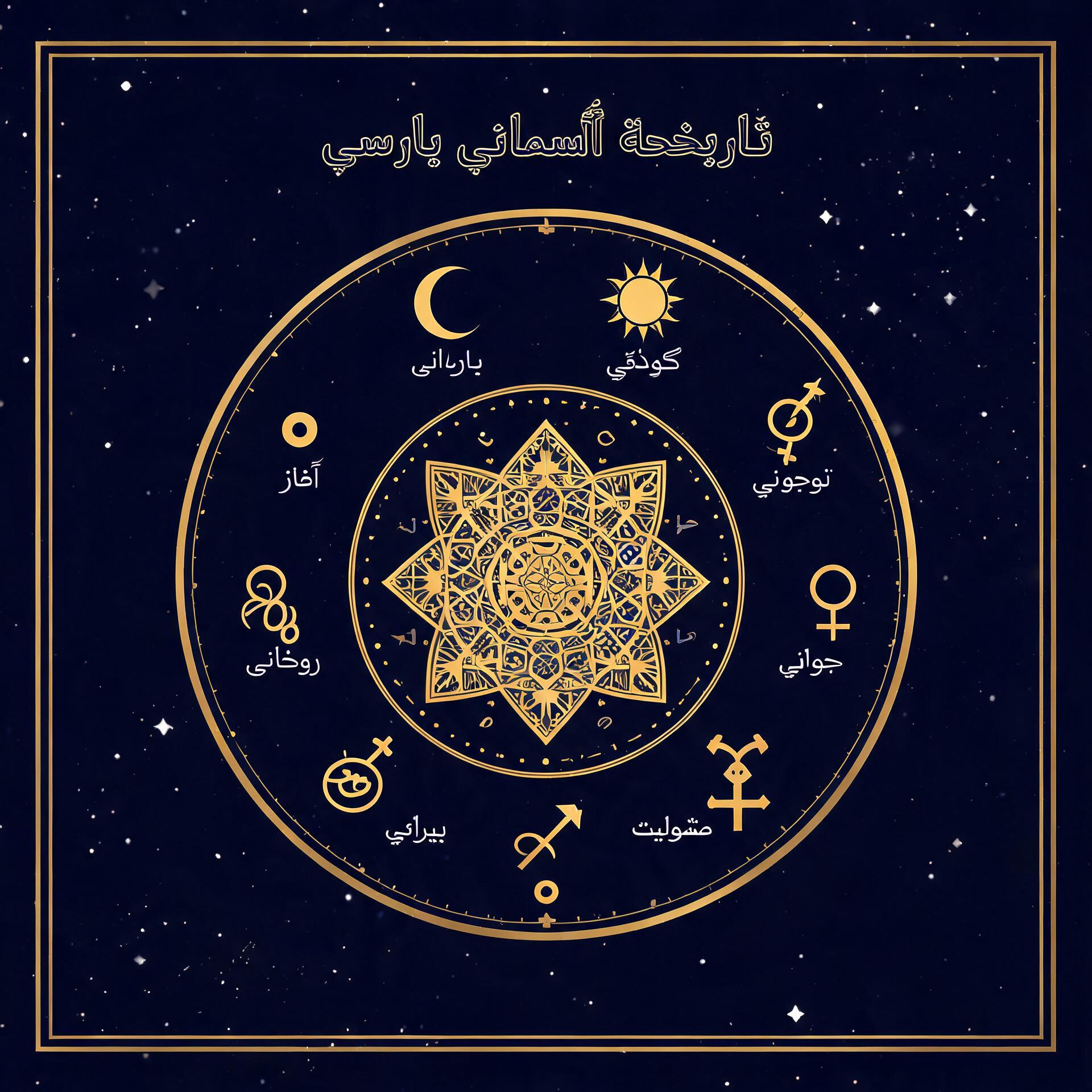
The Firdaria system assigns a fixed sequence of planetary periods (the "Great Firdaria" for the whole life) and a set of sub-periods (the "Lesser Firdaria"). The sequence follows the Chaldean order (Saturn-Jupiter-Mars-Sun-Venus-Mercury-Moon), but the starting point and lengths depend on whether the native's birth chart is diurnal (born during daylight) or nocturnal (born at night). Diurnal charts begin with the Sun (10 years), then Venus (8), Mercury (13), Moon (9), Saturn (11), Jupiter (12), Mars (7). Nocturnal charts begin with the Moon (9 years), then Saturn (11), Jupiter (12), Mars (7), Sun (10), Venus (8), Mercury (13).
Each planet-ruled period in the Great Firdaria activates the affairs of that planet in the natal chart. A Mars period correlates with years of active combat, career initiation, competitive effort, or physical intensity — depending on Mars's condition in the natal chart. A Venus period correlates with relationship formation, aesthetic development, financial ease or strain — depending on Venus's condition. The quality of the period is determined by the natal planet's sign, house, aspects, and essential dignity, not by the period itself.
The Lesser Firdaria divides each major period into sub-periods governed by the same sequence of planets. In a 7-year Mars period, the first sub-period (approximately 7 months) is ruled by Mars, the next by the next planet in the order, and so on through the entire sequence. The sub-periods add texture to the major period: a Mars period may begin with a Mars-Mars sub-phase of pure Martial activity, then move into a Mars-Jupiter sub-phase where the Martian effort finds expansion.
⚡ vs Transit
Firdaria describes the native's position in the long-term cycle of planetary rulership — it is a life-stage framework, not a timing mechanism. Transits operate within Firdaria periods. A Mars Firdaria creates a multi-year environment of Martial activity. A Saturn transit to the natal Venus during a Mars period indicates a specific window (the Saturn transit) within the Mars period when the native's relationships are tested — the Mars period sets the context; the transit provides the event timing. Firdaria is the decade; transits are the season.
🔑 Key Points
📖 How to Read
Determine whether the native's chart is diurnal or nocturnal (born during the day or night). Apply the appropriate starting sequence. Note the current major period ruler and the sub-period ruler. Assess the natal condition of both rulers: sign, house, essential dignity, aspects, and house rulership. A period ruler in its own sign or exaltation produces a period of relative ease in that planet's domain. A period ruler in fall or detriment produces a period of challenge and growth through that planet's domain. The sub-period ruler adds a secondary layer — the Mars-Firdaria native with a Jupiter sub-period experiences the Mars period through Jupiter-ruled opportunities. Track transitions between major periods — the 12-18 month window around a period change is the most significant life transition in the Firdaria system.
❓ FAQ
How is Firdaria different from the zodiacal releasing system?
Both are time-lord systems from the Hellenistic tradition. Firdaria uses fixed planetary periods based on the Chaldean order. Zodiacal releasing (also called the Circumambulation of the Lots) uses the 12-sign sequence and the Lot of Fortune or Spirit as the starting point. The two systems often agree on the character of a life period but use different mechanics. They are best used together for confirmation.
Does Firdaria work for every native regardless of modernity?
Firdaria was developed in a pre-modern context where life spans were shorter and social roles were more fixed. Its primary periods of 7-13 years each still map well onto modern developmental stages — the Mars period (active career building, ages 20s-30s), the Venus period (relationship formation and aesthetic development, ages 30s-40s), the Mercury period (teaching and transmitting, ages 40s-50s). The periods align with developmental stages across historical periods.