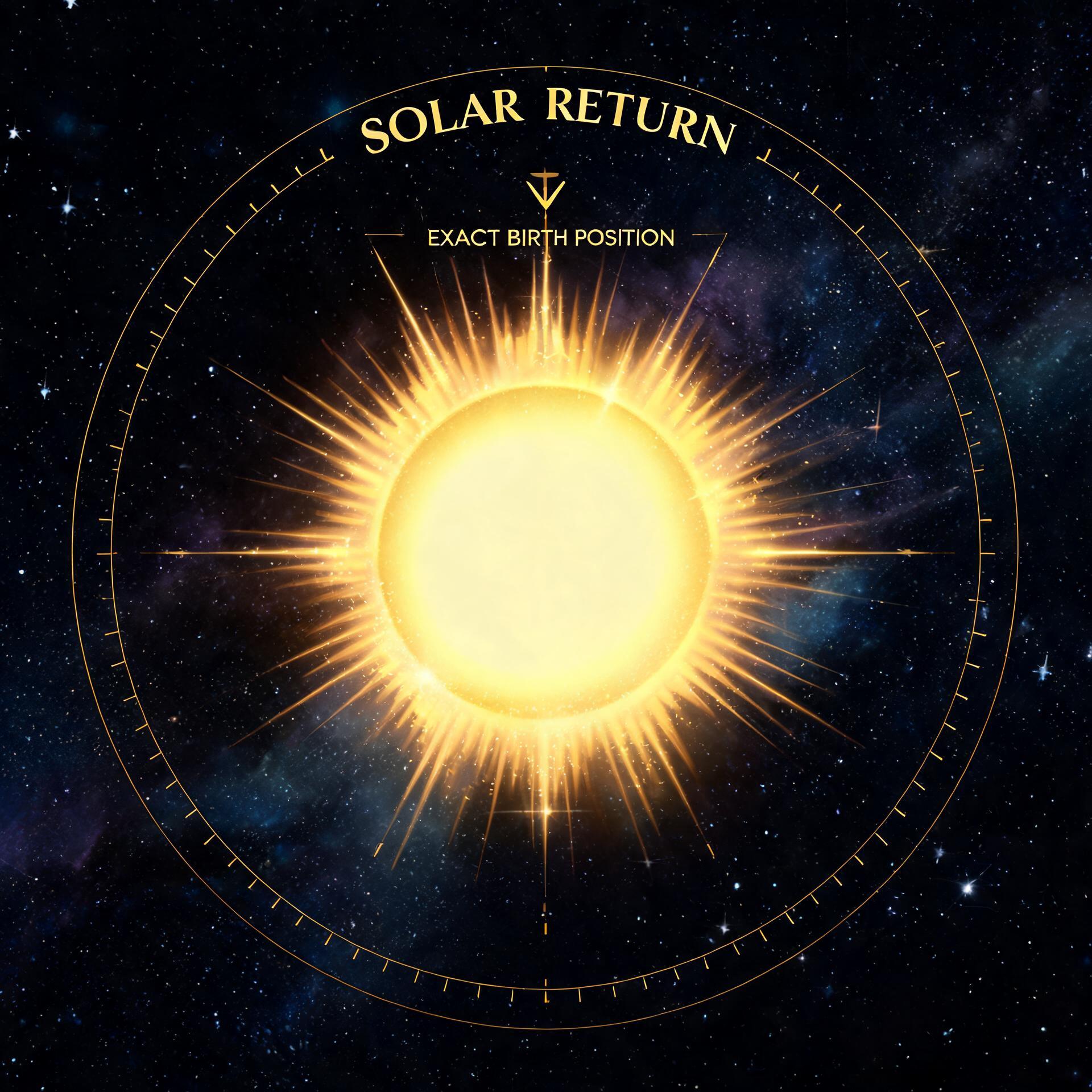
Definition
The solar return is calculated for the time when the Sun reaches the exact degree and minute of its natal position, at the native's current location (or birth location for stationary natives). The resulting chart is read as the native's operating field for the next 365 days. The most significant indicators in the solar return are: the return chart's Ascendant and Midheaven (which indicate the year's primary domains of experience), planets within 5 degrees of the return angles (which are activated for the year), the return Sun's house placement (which indicates where the native's energy will be concentrated), and planets forming aspects to the return angles or to the natal Sun.
The solar return operates on a different logic from the lunar return. The lunar return describes emotional climate — short-term weather. The solar return describes thematic architecture — the issues that will structure the year. A solar return with Saturn on the ASC indicates a year of structural pressure and slowed momentum, regardless of what the individual lunar returns within that year show. The lunar returns modulate the texture; the solar return determines the structure.
The location of the solar return matters. The return calculated for the native's birthplace will produce different angles than the return calculated for their current location. A native who travels to a different city for their birthday can change their solar return angles significantly, shifting the year's thematic emphasis. This is the basis for birthday travel planning — choosing a location that places beneficial planets on the return angles.
⚡ vs Transit
The solar return is a complete chart for the year — it has its own houses, angles, and planetary configurations. Transits are current sky conditions that overlay both the natal and solar return charts. A solar return with Jupiter in the 2nd house suggests a year of financial expansion. A Saturn transit to the natal 2nd house during that same year indicates that within the expansion theme, there will be specific periods of financial pressure that test the quality of the expansion. The solar return sets the year's theme; transits mark the specific timing of developments within that theme.
🔑 Key Points
📖 How to Read
Generate the solar return chart for the native's current location on their birthday. Note the return ASC and MC signs and degrees — these frame the year's primary domains. Identify any planets within 5 degrees of the return angles — these are activated for the year. Check the return Sun's house — where the native's energy will be centered. Review the Moon's placement for the year's emotional baseline. Compare the return chart to the natal chart: any return planet within 3 degrees of a natal planet or angle indicates a direct activation — the year's theme in that domain will be felt more strongly. Note the return chart's Saturn and Jupiter positions — these indicate the year's structural constraint and expansion domains, respectively.
❓ FAQ
Can I change my solar return by traveling on my birthday?
Yes. The solar return angles shift with location. A native who travels to a different city on their birthday will generate different return ASC and MC degrees. This is the basis for birthday location planning — selecting a destination that places beneficial planets on the return angles. The effect lasts for the entire year, making intentional birthday travel one of the most practical tools in applied astrology.
How does a solar return relate to the Saturn return?
The solar return describes the year's themes within the larger structural context of the Saturn return. A difficult solar return during a Saturn return period indicates a year of significant structural pressure. An easy solar return during the same period provides a temporary reprieve within the larger restructuring process. The solar return modulates the intensity of longer-term cycles.