Definition
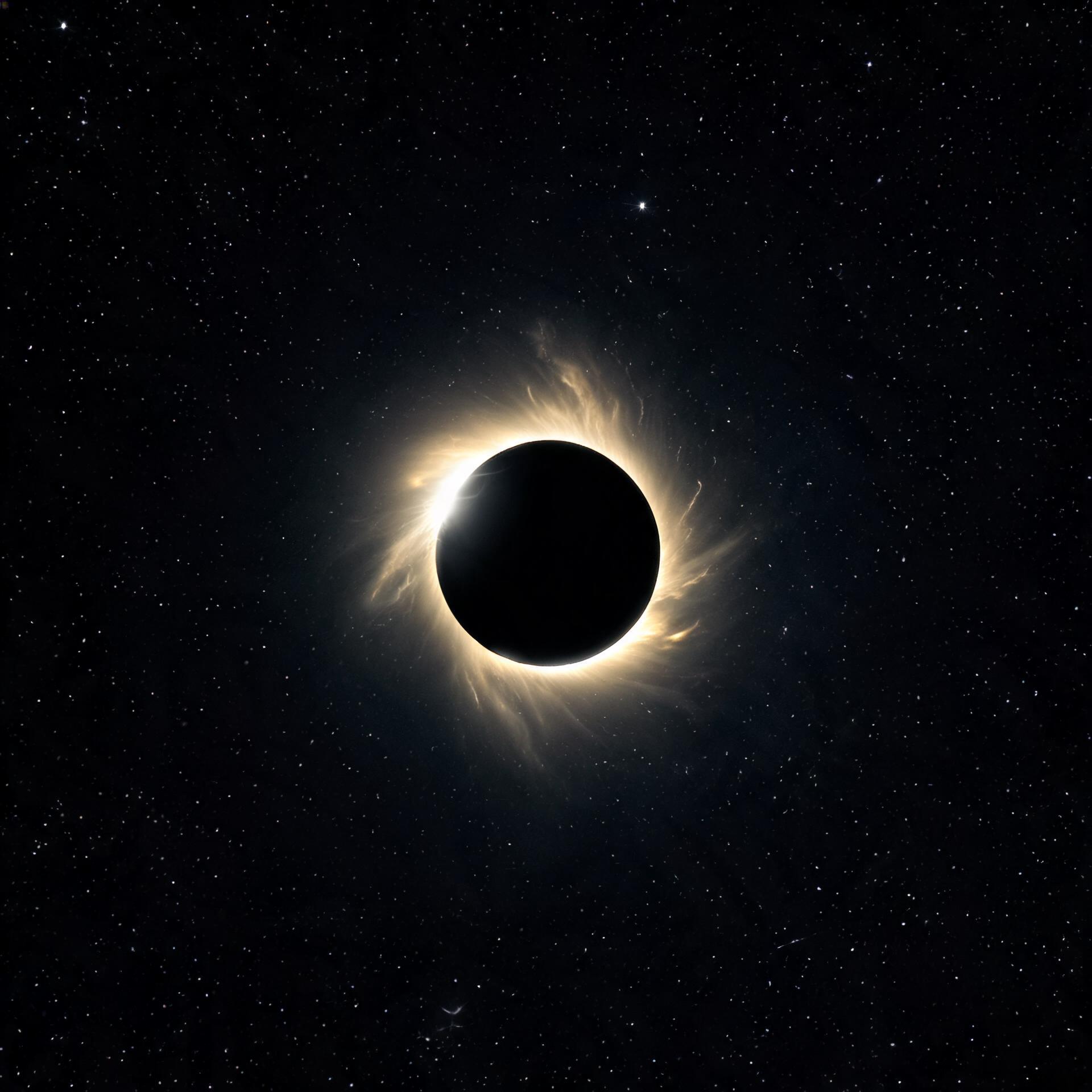
Solar eclipses occur at the New Moon phase when the Moon passes between Earth and the Sun, casting its shadow on the Earth's surface. Lunar eclipses occur at the Full Moon phase when the Earth passes between the Sun and Moon, casting Earth's shadow on the lunar surface. Both types require the Sun, Moon, and Earth to be within approximately 18 degrees of the lunar nodes — the points where the Moon's orbit (tilted 5.14 degrees from the ecliptic) crosses the ecliptic plane.
There is a Saros cycle of approximately 18 years 11 days — after which a similar eclipse occurs at the same node in approximately the same zodiac degree. Each Saros series has a character that is documented across centuries. The North Node eclipses tend to accelerate forward movement — new beginnings, fated encounters, career launches. The South Node eclipses tend to accelerate release — endings, completions, the clearing of karmic debt. The Moon's nodes move retrograde at roughly 3 degrees per month, and every 18 months the nodes shift into the opposite signs, changing the nature of the eclipse cycle.
Solar eclipses last only minutes — the Moon's shadow races across the Earth's surface at over 1,700 km/h. Lunar eclipses can last hours — Earth's shadow is much larger than the Moon, so the occultation is gradual and sustained. Despite the difference in duration, both types are considered equally potent in astrological timing. The key distinction is between solar (external events, new beginnings, visible milestones) and lunar (internal processing, emotional culminations, subconscious surfacing).
💡 Survival Tips
Note the eclipse degree. Events triggered by an eclipse tend to unfold in stages that correspond to the eclipse's proximity to natal chart points: within 0-3 degrees of a natal planet or angle, the eclipse is directly activating that point. Eclipse events tend to arrive in clusters — a solar eclipse triggers the external milestone, the corresponding lunar eclipse six months later processes the emotional dimension, and the next eclipse in the same Saros series (one year later) completes the cycle. Do not make permanent decisions within three days of a solar eclipse or one week of a lunar eclipse — the timeline acceleration creates a false sense of urgency, and decisions made in the compressed window may not reflect long-term priorities. Revisit the decision one lunar cycle later.
Identity and self-presentation are accelerated. A solar eclipse here triggers a new chapter in personal identity. A lunar eclipse here surfaces emotional material about how you see yourself.
Resources and values are accelerated. Financial shifts, reassessment of what you value, and changes in earning or spending patterns are concentrated.
Communication and information networks are accelerated. Messages arrive with unusual timing, key conversations cannot be avoided, and information that was hidden surfaces.
Home and family matters are accelerated. Relocations, family structure changes, and shifts in the domestic foundation are concentrated.
Creativity and romance are accelerated. New creative projects launch, relationships form or end with unusual speed, and visibility events occur in compressed timelines.
Work and health are accelerated. Job changes, health diagnoses, and daily routine restructuring occur in compressed windows.
Partnerships are accelerated. Relationships form or dissolve at key eclipse points. Business partnerships and marriages are timed by eclipse cycles.
Shared resources and deep psychology are accelerated. Inheritances, debts, and psychological breakthroughs are concentrated at eclipse points.
Beliefs and education are accelerated. Philosophical shifts, travel events, and educational milestones are compressed.
Career and public standing are accelerated. Promotions, public recognition events, and career pivots occur at eclipse-timed intervals.
Social networks and community are accelerated. Friendships form or dissolve, group memberships shift, and the native's relationship to collective movements accelerates.
Spirituality and the unconscious are accelerated. Dreams become more vivid, intuitive hits intensify, and material from the subconscious surfaces for processing.
❓ FAQ
Are eclipses dangerous?
Eclipses are not dangerous in the sense of causing harm. They concentrate timeline — whatever is already developing at that zodiac degree will manifest faster under eclipse activation. If the developing situation was positive, the eclipse accelerates the positive outcome. If it was problematic, the problem surfaces faster. The eclipse itself is neutral; it is the pre-existing condition that determines the quality of the event.
How long do eclipse effects last?
The most concentrated effects occur within the eclipse window itself — three days for solar, one week for lunar. The broader effects unfold over the six months until the next eclipse in the opposite node activates the complementary dimension. The full eclipse cycle — from one node to the next in the same pair of signs — lasts approximately 18 months.
Do eclipses affect everyone the same way?
No. An eclipse's impact depends on whether it activates a natal chart point. An eclipse that falls within 3 degrees of a natal planet, angle, or node is directly activating that point and will be felt personally. An eclipse that does not contact any natal point may be experienced as a background acceleration in the relevant zodiac domain but will not produce a personal milestone.